
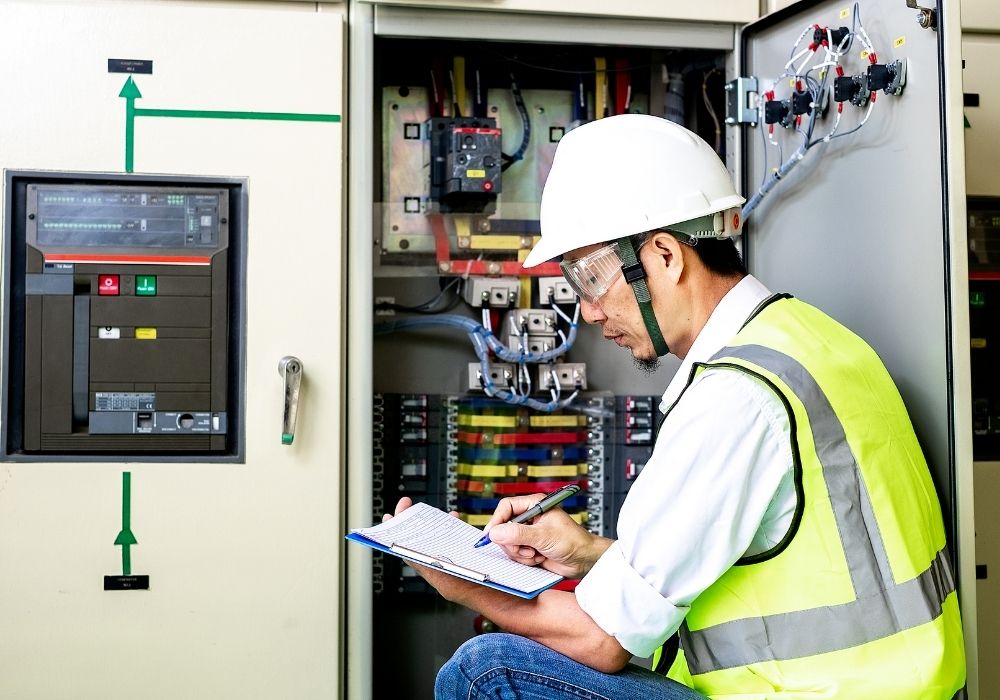
Why Supplier Evaluation Matters for Enclosure Accessories Procurement
When sourcing components for industrial projects, a lower price tag on a quotation does not necessarily mean a lower overall cost. Purchasing electrical enclosure components is a strategic decision where the risks of choosing the wrong partner can heavily outweigh initial cost savings.
Selecting an unqualified supplier can lead to severe product reliability issues, frustrating project delays, certification risks during export or inspection, and ballooning after-sales costs. Establishing a standardized supplier evaluation process is the most effective way to mitigate these procurement risks. Ultimately, choosing the right enclosure accessories supplier is critical for ensuring product reliability, delivery stability, and long-term project success.
Here is a step-by-step guide to evaluating and selecting the best supplier for your project needs.
1. Define Your Technical Requirements Before Evaluating Suppliers
The first step in procurement isn't actually looking for a supplier—it's clearly defining what you need. By thoroughly understanding your project requirements, you can quickly filter out suppliers who cannot meet your technical standards.
1.1 Identify the Application Requirements of Your Electrical Enclosure
Different applications demand entirely different accessory specifications. You need to clarify where and how your enclosures will be used. Common applications include:
- Control cabinets
- Electrical enclosures
- Industrial automation equipment
- Outdoor electrical cabinets
- Energy storage systems
For each of these, your engineering and procurement teams must confirm the specific installation environment, the expected temperature range, the necessary protection requirements (such as IP or NEMA ratings), and the required cooling requirements.
1.2 Determine the Required Types of Enclosure Accessories
Once the environment is clear, map out the exact components you need. A comprehensive procurement list might include:
- Fan filters and axial fans
- Enclosure cooling fans
- Cabinet heaters
- Thermostats and hygrostats
- Cable glands and terminal blocks
- Mounting accessories
A professional enclosure accessories supplier should provide a complete product portfolio rather than a single product category. Sourcing all compatible components from a single provider ensures seamless integration and simplifies your supply chain.
2. Evaluate Supplier Product Capability and Technical Expertise
Your ideal partner should be a true manufacturer, not just a middleman. This is especially true if you are looking for a reliable OEM enclosure cooling supplier who can adapt to changing project demands.
2.1 Check Product Range and Manufacturing Capability
When auditing an enclosure accessories manufacturer, look for deep manufacturing roots. Evaluate them on the following criteria:
- Do they possess a complete and cohesive product line?
- Do they have an independent R&D department for continuous innovation?
- Do they support product customization based on specific drawings?
- Do they own mature molds and exhibit strong in-house production capabilities?
2.2 Review Technical Specifications and Product Performance
Don't just take their word for it; dig into their datasheets. Procurement teams must carefully check the performance metrics:
- For cooling products: Verify the airflow (CFM / m³/h), available voltage options, operating noise level, power consumption, and the IP protection rating.
- For protection accessories: Evaluate the material quality, temperature resistance capabilities, and overall mechanical strength.
3. Verify Supplier Quality Management and Certifications
Quality is non-negotiable in electrical enclosures. This section is vital for lowering your procurement and compliance risks.
3.1 Check Quality Control Processes
A supplier is only as good as their quality control. Ask to see their standard operating procedures for:
- Incoming material inspection: Ensuring raw materials meet specifications.
- Production quality control: Monitoring quality at every step of the assembly line.
- Final inspection: Testing finished products before packaging.
- Batch traceability: The ability to track a defect back to a specific production date and batch.
3.2 Review International Certifications and Compliance
Using non-certified accessories can cause an entire electrical cabinet to fail local inspections. Always use this checklist to verify compliance:
- UL certification (Crucial for the North American market)
- CE certification (Mandatory for the European market)
- RoHS compliance (Ensuring products are free from hazardous substances)
- ISO9001 quality management (Proof of standardized business operations)
4. Assess OEM and Customization Capabilities
Standard off-the-shelf products don't always fit specialized engineering projects. This is where an experienced OEM enclosure cooling supplier adds immense value.
4.1 Does the Supplier Support OEM Projects?
Evaluate how flexible the factory is in adapting to your brand and technical needs. Can they accommodate:
- Logo customization and branding?
- Customized packaging for retail or specific project delivery?
- Product modification (e.g., altering dimensions or mounting holes)?
- Special voltage requirements for different grid standards?
- Regional compliance adaptations?
4.2 Evaluate Engineering Support Capability
An excellent supplier acts as an extension of your engineering team. They should be able to provide:
- Proactive product selection support
- Enclosure cooling calculation assistance to prevent overheating
- Accurate 2D/3D technical drawings
- Rapid sample validation for prototyping
5. Evaluate Production Capacity and Delivery Reliability
Supply chain stability is a purchaser's biggest concern. Even the highest-quality product is useless if it arrives three months late.
5.1 Check Manufacturing Scale and Production Stability
To assess if a supplier can handle your volume, review their factory capacity, the modernity of their production equipment, the size and skill of their workforce, and their upstream supply chain management.
5.2 Understand Lead Time and Supply Capability
Ask the hard questions about delivery before signing a contract:
- What is the standard lead time for bulk orders?
- How do they handle emergency orders?
- What is their standard stock availability for fast-moving items?
- Do they have robust global shipment capability to deliver to your international sites?
6. Compare Supplier Service and Long-Term Partnership Potential
Procurement is not a one-off transaction; it's a partnership. Avoid the trap of comparing suppliers solely on spreadsheet prices.
6.1 Evaluate Pre-Sales Technical Support
A dedicated supplier will help you succeed before you even place an order. Look for a team that offers expert product recommendation, meticulous specification confirmation, and seamless sample testing processes.
6.2 Review After-Sales Support and Warranty Policy
Mistakes and defects happen, but how the supplier handles them defines their reliability. Carefully check their standard warranty period, the transparency of their replacement process, and their technical response speed when an issue is reported.
7. Common Mistakes When Choosing an Enclosure Accessories Supplier
Learn from the failures of others to protect your supply chain. Avoid these three common procurement pitfalls:
7.1 Choosing Only Based on Price
Prioritizing the absolute lowest price almost always leads to lower-quality materials, significantly higher failure rates in the field, and hidden replacement costs that destroy your project budget.
7.2 Ignoring Certification Requirements
Sourcing uncertified components can result in severe import issues at customs, complete project rejection by local inspectors, and massive compliance problems.
7.3 Selecting a Supplier Without OEM Experience
Partnering with a supplier that lacks OEM expertise often results in poor customization ability, slow communication and response times, and a severe lack of engineering support when you hit technical roadblocks.
8. Enclosure Accessories Supplier Evaluation Checklist
Before you sign a contract, run the candidate supplier through this quick recap — if they fall short on more than one or two items, treat it as a red flag:
- Clear, documented technical requirements matched against the supplier's product range
- True manufacturer status, with in-house R&D, tooling, and production capability
- Verifiable performance data for every relevant product (airflow, IP rating, materials, mechanical strength)
- Documented QC process covering incoming inspection, in-line control, final inspection, and batch traceability
- Valid UL, CE, RoHS, and ISO9001 certification (or the equivalent required for your target market)
- Demonstrated OEM/customization capability: branding, packaging, dimensional changes, voltage variants
- Engineering support: selection assistance, cooling calculations, 2D/3D drawings, fast sample turnaround
- Production capacity and lead times that match your order volume and delivery deadlines
- Responsive pre-sales technical support and a clearly stated warranty/after-sales policy
Choose an Enclosure Accessories Supplier That Reduces Procurement Risk
At the end of the day, the core of your procurement decision should not be about finding the lowest price. The goal is to build a supply chain built on reliable quality, stable supply, robust technical support, and flexible OEM capability. By following this evaluation framework, you can partner with a manufacturer that actively protects your project's bottom line.
Leipole holds CE, UL, and RoHS certification and operates under an ISO9001-certified quality management system — so when you run us through this same checklist, we're ready for the audit.
Looking for a reliable enclosure accessories supplier for your project? Explore our enclosure accessories solutions or contact our team for samples and quotation.